Prices
  Request a call back
  Moving Guides
  Free quote
 RBKC parking permits for removals: Notting Hill guide
Posted on 18/06/2026
If you're moving in Notting Hill, parking can make or break the day. A perfectly packed van is no use if it can't stop legally outside your building, and in Kensington and Chelsea that usually means thinking ahead about RBKC parking permits for removals: Notting Hill guide rules before the first box leaves the flat. In practice, the easiest moves are the ones planned around loading bays, permits, restricted zones, building access, and the realistic timing of London traffic. This guide walks you through the moving-day parking side of things in plain English, so you can avoid last-minute stress, avoidable delays, and that sinking feeling when the crew is ready but the kerb space isn't.
We'll cover how removal parking usually works in the borough, why it matters so much in Notting Hill, what to ask your removals team, and where people most often trip up. If you're also comparing move types or planning a broader relocation, it may help to skim the full overview of moving services and how quotes and pricing are put together while you read. A little prep goes a long way. Honestly, more than a little.
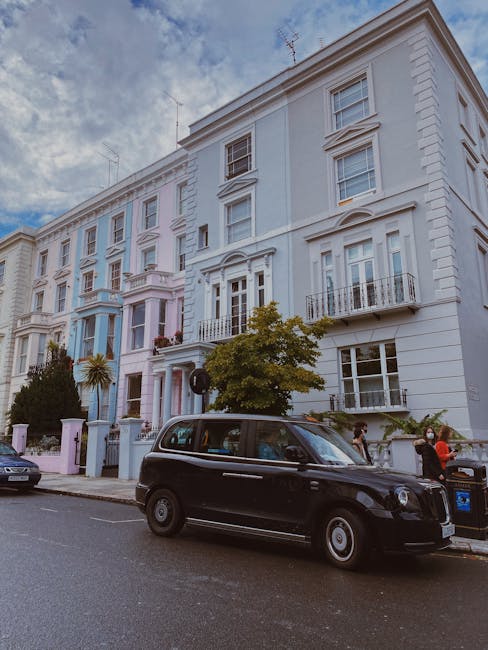
Why RBKC parking permits for removals: Notting Hill guide Matters
Notting Hill is one of those places where the geography looks deceptively simple on a map and then turns into a real-world puzzle the moment a removal van arrives. Terraced streets, controlled parking, busy daytime traffic, residents' bays, suspended spaces, and tight corners all create friction. If the van has nowhere sensible to wait, the whole move slows down. Sometimes it slows down a lot.
That matters for three reasons. First, a moving team needs legal access to load and unload safely. Second, parking mistakes can create penalties or awkward conversations with building managers, neighbours, or wardens. Third, time lost on the kerb often becomes money lost elsewhere: extra labour time, extra waiting, or the need to reshuffle the move around local restrictions. For anyone moving out of a flat near Portobello, a maisonette off Ladbroke Grove, or a townhouse closer to Holland Park, this is not a side issue. It's central.
There's also the reputation factor. A removal day already has enough moving parts: keys, lifts, wrapping, disassembly, fragile items, timing with the buyer or landlord. When parking has been sorted properly, the day feels calmer and more professional. That calmer start tends to ripple through the rest of the move. If you're still in the planning stage, our local context pages like our Notting Hill area guide and local insights on living in Notting Hill are useful background reading too.
Expert summary: In Notting Hill, parking is not just a convenience issue for removals; it is part of the move plan. If access is tight, permit planning should happen as early as packing planning, not after it.
How RBKC parking permits for removals: Notting Hill guide Works
In plain terms, a removals parking arrangement is about making sure the vehicle can lawfully stop close enough to the property to load or unload safely. In RBKC, that often means checking whether the road is controlled, whether there is a loading bay, whether a bay suspension is needed, or whether the van can use a space under a specific temporary arrangement. The exact route depends on the street, the time of day, and the type of property.
Here's the part people miss: there isn't one universal "removals permit" that magically solves every Notting Hill move. Different streets and situations may require different permissions or a different plan altogether. In some cases, a standard parking session in a bay may be enough; in others, you may need a temporary suspension or a specific authorisation. The key is to check early and match the vehicle and access plan to the location, not the other way round.
For flats, this often involves the building as much as the borough. A concierge might control access to the service area, or a management company may need advance notice. For homes on narrower streets, you may need to think about the size of the van, whether it can safely reverse, and how close it can get to the door without blocking traffic. If you're using a man with a van in Notting Hill or arranging a larger crew through Notting Hill removals, the parking plan should be tailored to the vehicle size and the street layout.
In a typical well-planned move, the sequence looks like this:
- Confirm the moving date and rough arrival window.
- Check the street conditions and likely parking restrictions.
- Identify whether a bay, loading point, or special arrangement is needed.
- Build the access plan around the vehicle size and building constraints.
- Keep the driver, the client, and any building contact aligned on the day.
That sounds simple. It rarely is if nobody owns the parking detail.
Key Benefits and Practical Advantages
Getting the parking side right brings more benefits than people expect. The obvious one is legal compliance, which is important enough on its own. But the practical gains go further.
- Faster loading and unloading: The van is where it needs to be, so the team can work efficiently.
- Less physical strain: Fewer long carries across the street mean less risk of bumps, drops, and fatigue.
- Better protection for furniture: The shorter the distance, the less handling required for fragile or bulky items.
- Reduced stress: Fewer surprises on the day usually means fewer arguments and less panic.
- Lower chance of knock-on delays: Parking issues can push back lift bookings, handover times, and onward travel.
In Notting Hill, this is especially relevant for apartment moves and busy roads near popular high streets. A small access issue can snowball quickly. If you've ever seen a remover balancing a wardrobe on a rainy pavement while traffic hums past, you'll know exactly what I mean. It's not ideal, to put it mildly.
This is also one of the reasons why experienced teams ask access questions early. The people behind our Notting Hill movers and home removals service know that parking is not a footnote. It shapes the entire moving-day rhythm.
Who This Is For and When It Makes Sense
This guide is for anyone moving in or out of Notting Hill where the removal vehicle cannot simply park in an unrestricted driveway. That includes:
- flat dwellers on controlled streets
- families moving from terraced houses with limited frontage
- students shifting between shared homes and flats
- office relocations where delivery bays matter
- people using larger vans for bulky furniture
- anyone moving during busy weekday hours
It also matters if you're moving piano, antique furniture, or awkward items that need a very close vehicle position. A small detail becomes a big one with heavy or delicate pieces. If that sounds familiar, the support offered through furniture removals in Notting Hill or piano removals is worth considering, because those jobs tend to be more sensitive to access and waiting time.
There are also moments when it makes sense to go beyond the basic plan. For example, if you're moving on a Saturday near Portobello Road, or you're dealing with a shared building entrance and a narrow street, you may need more careful scheduling than a standard weekday flat move. Our articles on the best times for Portobello Road moves and access tips for Holland Park Estate moves give a feel for how local access conditions can change the shape of a move.
Step-by-Step Guidance
Below is the practical version. Nothing fancy, just the sequence that helps most people avoid last-minute parking drama.
1. Confirm your exact move date and time window
Before anything else, pin down when the van needs to arrive and when loading should realistically begin. Moving windows in London can be tighter than people think. If you are waiting on keys, a lift slot, or a landlord handover, allow slack. A schedule that looks clean on paper can wobble in the real world.
2. Check the street environment
Look at the road outside the property and ask practical questions: Is there a loading bay? Is parking restricted at certain times? Is the street so narrow that a larger van will struggle to stop without obstructing traffic? If you're not sure, get someone who knows local streets to assess it. Sometimes the answer is obvious. Sometimes it is absolutely not.
3. Speak to your removals provider early
Your removals team should know how to plan around parking constraints, especially if they regularly work in Notting Hill. Share details like building entrance type, floor level, lift access, access codes, and any known restrictions. A quick conversation can prevent a much longer one on the day.
4. Check if the building has its own rules
Many people focus on the road and forget the building. Yet communal entrances, concierge rules, and service entrances can be just as important. You may need to reserve a slot, notify management, or confirm where the van should stop. That's especially common in larger apartment blocks and managed estates.
5. Build the move around access, not the other way round
This is the main mindset shift. If access is tight, don't assume the crew can "work around it" at the last minute. Choose the vehicle size, manpower, packing method, and timing to fit the street and property. A practical access plan is part of the move itself.
6. Keep everyone informed on the day
Send the driver, the moving team, and any building contact a final confirmation. If plans change, say so early. One text at the right time can save an hour of circling. Possibly more.
Expert Tips for Better Results
These are the little things that usually separate a smooth move from a messy one.
- Book access planning before packing reaches the frantic stage. Once the boxes pile up, people stop thinking clearly.
- Use the smallest vehicle that still fits the job. Bigger is not always better on Notting Hill streets.
- Label fragile items clearly and keep them close to the exit. Shorter carries are easier to manage.
- Ask about contingency time. If a bay is occupied or delayed, what happens next?
- Plan for weather. Rain makes loading slower and riskier, especially where kerb space is tight.
- Think about neighbours. A polite heads-up can smooth over a lot of friction, particularly in shared buildings.
If you're comparing providers, it can help to read why removals quotes vary. Parking and access often explain part of the difference, even if it's not obvious at first glance. And yes, the cheapest quote is not always the cheapest move. It's a classic London trap.
One more practical note: if you are also buying or selling in the area, the timing may already be under pressure. Our guides to Notting Hill buy-and-sell tips and property buying advice in Notting Hill are useful for seeing how moving logistics fit into the wider property process.
![The image depicts a busy street scene in Notting Hill during daylight hours, with a row of multi-storey buildings lining the pavement on the left side. Several parked cars are visible along the curb, with some partially obscured by pedestrians walking in both directions. On the right side, there is a designated loading area marked by white painted lines on the asphalt, with black bollards separating it from the pedestrian walkway. Large trees with dense foliage overhang the scene, casting shadows on the pavement. In the background, people are engaged in various activities, and the sky is partly cloudy with patches of blue. This setting could illustrate the typical environment where [COMPANY_NAME], such as Notting Hill Removals, may assist with home relocation or furniture transport, particularly when navigating streets requiring parking permits for moving day.](/pub/blogphoto/rbkc-parking-permits-for-removals-notting-hill-guide2.jpg)
Common Mistakes to Avoid
Most removals parking problems come from a handful of predictable mistakes. The good news? They're avoidable.
- Leaving parking until the day before. That is the biggest one, by far.
- Assuming the driver will sort everything out alone. They can help, but they are not mind readers.
- Forgetting about loading restrictions for the exact time slot. A road that looks available at 9 a.m. may not be at 10 a.m.
- Not matching the vehicle to the street. A large van can be the wrong tool for a tight street.
- Ignoring the building manager or concierge. If they control access, that matters.
- Failing to leave a backup plan. A blocked bay with no contingency is how stress escalates.
A subtle mistake is underestimating how long it takes to carry items even when the van is parked nearby. On a hot day it can feel slower. In rain it is slower. With a sofa or wardrobe? Slower again. Truth be told, the kerbside part of a move can define the whole day.
Tools, Resources and Recommendations
You do not need complicated tools here. What you need is a good information trail and a few practical checks.
- Floorplan or photos of the property: Helpful for judging access and furniture routes.
- Street-view style visual checks: Useful for understanding road width, bends, and parking pressure.
- Building management notes: Especially useful in estates, mansion blocks, and managed flats.
- Move inventory: Helps decide whether a smaller or larger van is needed.
- Time buffer: A simple buffer is often the best resource of all.
For practical help beyond parking, you may also want to look at packing and boxes guidance, van hire and vehicle planning, and the wider removal services available in Notting Hill. If you're doing a quicker turnaround, the same-day removals option may also be relevant, though access planning becomes even more important when time is tight.
If you are comparing providers, the broader company side matters too. Pages such as removal companies in Notting Hill and local movers can help you assess service style, while insurance and safety information is worth checking before you book. Small detail, yes. But these details matter.
Law, Compliance, Standards, or Best Practice
Parking arrangements for removals sit in the overlap between local parking control, property access, and general road safety. In a borough like RBKC, it is sensible to treat parking rules as something that must be checked rather than guessed. If a move involves restricted bays, suspended spaces, loading zones, or timed restrictions, the safest approach is to confirm the current position before moving day.
Best practice is straightforward: do not assume a van can stop wherever it is convenient; do not treat a hazard lights stop as permission; and do not rely on a memory of what "usually happens" on that street. Conditions can change, and the person who gets caught out is usually the person who assumed everything would be fine. It often is, until it isn't.
For teams handling the move, good practice also includes:
- clear communication with the client
- clear understanding of the access route
- safe manual handling around the vehicle
- avoiding obstruction wherever possible
- respecting neighbours, pedestrians, and building rules
If you want reassurance on business-side trust signals, our pages on about us, terms and conditions, and payment and security can help you understand how the wider service is structured. For sensitive matters, complaints procedure, privacy policy, and accessibility statement are also there for review.
Options, Methods, or Comparison Table
There is more than one way to handle removal parking in Notting Hill. The right method depends on the street, the building, the vehicle, and the time slot.
| Option | Best for | Pros | Limitations |
|---|---|---|---|
| Standard nearby parking | Lower-pressure streets with more space | Simple, quick, often enough for small moves | May not suit restricted roads or busy times |
| Loading bay use | Short loading/unloading jobs | Efficient and close to the entrance | Time restrictions can be tight |
| Temporary parking suspension or special arrangement | Tighter roads and larger removals | Creates predictable access near the property | Requires advance planning and checking |
| Smaller vehicle strategy | Narrow streets and awkward access | Easier to position and manoeuvre | May require more trips or careful load planning |
| Staged move with timed access | Blocks, estates, or concierge-managed buildings | Better control over the day | Needs coordination and patience |
In a Notting Hill setting, the "best" option is usually the one that reduces carrying distance without creating a parking headache. That's the sweet spot. Not glamorous, but very effective.
Case Study or Real-World Example
Picture a flat move from a second-floor apartment near a busy Notting Hill road. The occupants have boxes, a sofa, two bookcases, and a piano stool that somehow feels heavier than it should. They originally planned to have the van stop "just outside for a few minutes". Reasonable in theory. Problem is, the road is heavily controlled and daytime parking is tight.
Instead of leaving it to chance, the move is reworked two days earlier. The client sends over access notes, the team checks the street layout, and the vehicle choice is matched to the road rather than the wish list. The result? The van gets close enough for efficient loading, the crew avoids unnecessary double-handling, and the move stays on schedule. There are still the usual moving-day bits - a missing roll of tape, one awkward wardrobe angle, a brief argument with a door frame - but the parking piece is no longer the thing that threatens the day.
That is the real value of good RBKC parking planning. It removes one of the most common causes of delay before it becomes a problem. Quietly useful, that.
If you are moving soon and want a smooth, well-coordinated approach, our home removals, flat removals, and office removals pages are a sensible next stop for comparing the type of support you might need.
Practical Checklist
Use this before moving day. It is simple, but it saves a lot of stress.
- Confirm the exact move date and arrival window
- Check whether the street has controlled parking or loading restrictions
- Ask if the building needs advance notice or access approval
- Share photos, floor level, and entrance details with the removals team
- Decide whether a smaller van would be easier than a larger one
- Allow extra time for busy roads and flat access
- Prepare fragile items and bulky furniture for quicker loading
- Keep phones charged and key contacts easy to reach
- Have a backup plan if the planned space is unavailable
- Double-check everything the day before, not just the morning of the move
Quick takeaway: if you plan the parking properly, the rest of the removal feels noticeably easier. Not perfect, maybe, but better. Much better.
Conclusion
RBKC parking permits for removals: Notting Hill guide planning is really about one thing: making sure the van can stop, the team can work, and the move can stay calm enough to finish well. In a neighbourhood like Notting Hill, where access can be tight and timing matters, parking is part of the service, not an afterthought.
The best results come from early checks, honest communication, and a practical approach to the street and the building. If you get those pieces right, you reduce stress, protect your belongings, and keep the whole day moving in the right direction. That's the bit most people want, after all. A move that just works.
Get a free quote today and see how much you can save.
And if you're still in the early stages, take your time. A little planning now can save a very long afternoon later, and that's no bad thing.